Spiders, those eight-legged wonders, weave a tapestry of life across our planet. While the vast majority are harmless, a select few possess potent venom that can cause serious harm, even death, to humans. Today, we delve into the realm of these arachnid titans, exploring the top ten most dangerous spiders on our planet.
1. The Sydney Funnel-Web Spider (Atrax robustus)

The Sydney Funnel-Web Spider (Atrax robustus) is one of the most infamous and dangerous spiders in the world, and it holds a particularly fearsome reputation in its native habitat of eastern Australia. This spider is a member of the Atracidae family, which includes some of the most venomous spiders on the planet. Let’s delve deeper into its characteristics, behavior, habitat, and the impact it has had on humans.
Physical Description
-
Size and Appearance: The Sydney Funnel-Web Spider is a medium to large-sized spider, with body lengths reaching up to 5 cm (2 inches) and a leg span that can extend to 7 cm (2.8 inches). Its body is robust and covered in a glossy, dark brown to black exoskeleton, giving it a menacing appearance. The spider’s fangs are large and powerful, capable of piercing through fingernails or soft shoes.
-
Sexual Dimorphism: Males are typically smaller than females but are significantly more dangerous. Their venom is up to six times more potent than that of females, making them the primary concern for human bites.
Habitat and Behavior
-
Habitat: The Sydney Funnel-Web Spider prefers moist, cool environments and is commonly found in burrows in the ground, often near water sources such as streams, rivers, or damp forested areas. These burrows are lined with silk and can extend up to 30 cm (12 inches) deep, with a characteristic funnel-shaped entrance that gives the spider its name.
-
Behavior: This spider is nocturnal and spends most of its time in its burrow, emerging at night to hunt. It is an ambush predator, relying on its speed and venom to subdue prey, which includes insects, small vertebrates, and even other spiders. Despite its aggressive reputation, it generally avoids humans unless provoked or threatened.
Venom and Its Effects
-
Venom Composition: The venom of the Sydney Funnel-Web Spider is a complex cocktail of toxins, with the most potent being δ-atracotoxin, a neurotoxin that targets the nervous system. It causes overstimulation of nerve cells, leading to muscle spasms, paralysis, and, in severe cases, respiratory failure.
-
Human Envenomation: Bites from this spider are extremely painful and can be life-threatening, particularly if the bite is from a male. Symptoms of envenomation include sweating, nausea, vomiting, abdominal pain, difficulty breathing, and elevated heart rate. Without prompt medical treatment, the bite can be fatal, especially in children or individuals with pre-existing health conditions.
Historical Impact and Antivenom Development
-
Fatalities: Before the development of antivenom in the early 1980s, bites from the Sydney Funnel-Web Spider resulted in numerous fatalities, with at least 13 recorded deaths. The spider’s tendency to wander into urban areas, particularly during the mating season, increased the likelihood of human encounters.
-
Antivenom: The antivenom, developed by Dr. Struan Sutherland and his team at the Commonwealth Serum Laboratories (CSL), has been highly effective. Since its introduction, there have been no recorded deaths from Sydney Funnel-Web bites, provided that medical treatment is administered promptly. The antivenom is derived from the venom of the spider itself, and its development marked a significant milestone in Australian medical history.
Ecological Role and Conservation
-
Ecological Importance: Despite its dangerous reputation, the Sydney Funnel-Web Spider plays a vital role in its ecosystem as a predator, helping to control insect populations. Its presence is an indicator of a healthy, moist environment.
-
Conservation Status: The species is not currently considered endangered, but habitat destruction and urbanization pose potential threats. Conservation efforts focus on preserving its natural habitat and raising awareness about its ecological importance.
Human Interaction and Safety
-
Prevention: To avoid encounters with the Sydney Funnel-Web Spider, residents and visitors in eastern Australia are advised to wear gloves when gardening, shake out shoes and clothing before use, and avoid reaching into dark, damp areas where the spider may reside.
-
First Aid: In the event of a bite, immediate first aid involves applying a pressure immobilization bandage to slow the spread of venom and seeking emergency medical attention. The bite site should not be cut or sucked, as these methods are ineffective and can cause further harm.
Conclusion
The Sydney Funnel-Web Spider is a fascinating yet formidable creature that embodies the duality of Australia’s wildlife—both beautiful and dangerous. While its venom poses a significant threat to humans, the development of antivenom and increased awareness have greatly reduced the risks associated with its bites. Understanding and respecting this spider’s role in the ecosystem is key to coexisting with one of nature’s most potent predators.
2. The Brazilian Wandering Spider (Phoneutria spp.)

The Brazilian Wandering Spider, often referred to as the “armed spider” or “banana spider,” is one of the most venomous and notorious spiders in the world. Its reputation for aggression, potent venom, and tendency to wander into human habitats has made it a subject of both fear and fascination. Let’s explore this spider in greater detail, covering its biology, behavior, venom, and impact on humans.
Physical Description
-
Size and Appearance: The Brazilian Wandering Spider is a large arachnid, with a body length of up to 4.8 cm (1.9 inches) and a leg span that can reach up to 15 cm (6 inches). Its body is covered in fine hairs, and its coloration varies from brown to reddish-brown, often with distinctive dark stripes or spots on its legs and abdomen. Its large, forward-facing fangs are a striking feature, capable of delivering a deep and painful bite.
-
Eyes and Sensory Abilities: Like most spiders, it has eight eyes arranged in two rows, providing excellent vision for hunting in low-light conditions. Its sensory hairs are highly sensitive to vibrations, helping it detect prey and predators.
Habitat and Distribution
-
Range: The Brazilian Wandering Spider is native to the tropical and subtropical regions of South and Central America, including countries like Brazil, Argentina, Colombia, Costa Rica, and Peru. It is particularly common in the Amazon rainforest.
-
Habitat: Unlike many spiders that build webs, this species is a ground-dweller and does not construct permanent shelters. It is often found in forests, grasslands, and agricultural areas, where it roams the forest floor or hides under logs, rocks, and foliage during the day. It is also known to wander into human settlements, sometimes hiding in dark, secluded areas like shoes, clothing, or banana bunches, which has earned it the nickname “banana spider.”
Behavior and Hunting
-
Nocturnal Wanderers: As their name suggests, Brazilian Wandering Spiders are highly active hunters that roam at night in search of prey. They do not rely on webs to catch food but instead use their speed, agility, and venom to subdue their victims.
-
Diet: Their diet consists primarily of insects, small reptiles, amphibians, and even other spiders. They are opportunistic feeders and will attack anything they can overpower.
-
Aggression: These spiders are known for their defensive behavior. When threatened, they raise their front legs, displaying their fangs and distinctive red or orange mouthparts as a warning. They are quick to bite if provoked, making them particularly dangerous to humans.
Venom and Its Effects
-
Venom Composition: The venom of the Brazilian Wandering Spider is a complex mixture of neurotoxins, including PhTx3, which affects the nervous system by disrupting ion channels and neurotransmitter release. This can lead to severe pain, muscle paralysis, and, in extreme cases, respiratory failure.
-
Symptoms of Envenomation: A bite from this spider can cause immediate and intense pain, swelling, and redness at the site. Systemic symptoms may include sweating, nausea, vomiting, elevated heart rate, hypertension, and, in severe cases, priapism (prolonged and painful erections in males). Without prompt medical treatment, the bite can be fatal, particularly in children or individuals with weakened immune systems.
-
Guinness World Record: The Brazilian Wandering Spider holds the Guinness World Record for the most venomous spider, based on the lethality of its venom to mice. However, fatalities in humans are rare due to the availability of antivenom and medical care.
Historical Impact and Antivenom
-
Human Encounters: The spider’s tendency to wander into human habitats, particularly in banana plantations, has led to numerous bites over the years. Workers handling bananas have occasionally encountered these spiders, leading to its association with banana shipments.
-
Antivenom Development: Antivenom for Brazilian Wandering Spider bites was developed in the mid-20th century and has significantly reduced the risk of fatalities. Prompt administration of antivenom, along with supportive care, is critical for recovery.
Ecological Role
-
Predator and Prey: As an apex predator of small invertebrates, the Brazilian Wandering Spider plays a crucial role in controlling insect populations in its ecosystem. It is also preyed upon by larger animals, such as birds, reptiles, and mammals, contributing to the balance of its habitat.
-
Adaptability: Its ability to thrive in diverse environments, from dense rainforests to agricultural areas, demonstrates its adaptability and resilience.
Human Interaction and Safety
-
Prevention: To avoid encounters with Brazilian Wandering Spiders, people in endemic areas are advised to shake out clothing, shoes, and bedding before use, especially in rural or forested areas. Care should also be taken when handling bananas or other produce that may harbor the spider.
-
First Aid: In the event of a bite, immediate medical attention is essential. Applying a pressure immobilization bandage can help slow the spread of venom, but cutting or sucking the wound is not recommended.
Conclusion
The Brazilian Wandering Spider is a remarkable yet dangerous creature that exemplifies the complexity of nature. While its venom and aggressive behavior make it a significant threat to humans, its role in the ecosystem as a predator is invaluable. Advances in medical treatment and increased awareness have reduced the risks associated with its bites, allowing for a better understanding of this fascinating arachnid. Respecting its habitat and taking precautions can help minimize the chances of dangerous encounters, ensuring coexistence with one of the world’s most venomous spiders.
3. The Black Widow Spider (Latrodectus spp.)

The Black Widow Spider (Latrodectus spp.) is one of the most recognizable and feared spiders in the world. Known for its potent venom and distinctive appearance, this spider has earned a place in both scientific study and popular culture. Let’s explore the Black Widow in greater detail, covering its biology, behavior, venom, and impact on humans.
Physical Description
-
Size and Appearance: Female Black Widows are larger than males, with a body length of up to 1.5 cm (0.6 inches) and a leg span of about 4 cm (1.5 inches). Males are much smaller, typically less than half the size of females. The female’s body is glossy black, with a distinctive red or orange hourglass-shaped marking on the underside of the abdomen. Some species may also have red or white spots on the upper abdomen.
-
Sexual Dimorphism: The dramatic size difference between males and females is accompanied by differences in behavior and venom potency. Females are more aggressive and possess venom glands that are significantly larger and more potent than those of males.
Habitat and Distribution
-
Range: Black Widow Spiders are found worldwide in temperate and tropical regions. They are most commonly associated with North America, particularly the southern and western United States, but they also inhabit parts of Europe, Asia, Africa, and Australia.
-
Habitat: These spiders prefer sheltered, dark environments such as under rocks, logs, and woodpiles, as well as in garages, sheds, and other human-made structures. They build irregular, tangled webs close to the ground, which they use to capture prey and protect their egg sacs.
Behavior and Hunting
-
Web Building: Black Widows construct strong, sticky webs made of silk that is among the strongest natural fibers known. The web is not symmetrical like those of orb-weavers but is instead a messy, three-dimensional structure designed to trap prey.
-
Diet: Black Widows are carnivorous and primarily feed on insects such as flies, mosquitoes, beetles, and grasshoppers. They occasionally capture larger prey, including small reptiles or mammals, which they immobilize with their venom.
-
Mating Behavior: Mating is a risky endeavor for male Black Widows. After locating a female’s web, the male performs a courtship ritual to avoid being mistaken for prey. Despite these efforts, females often cannibalize males after mating, giving rise to the spider’s name.
Venom and Its Effects
-
Venom Composition: Black Widow venom contains a potent neurotoxin called α-latrotoxin, which targets the nervous system. This toxin causes the release of neurotransmitters, leading to intense pain and muscle contractions.
-
Symptoms of Envenomation: A bite from a Black Widow can cause latrodectism, a condition characterized by severe pain at the bite site, muscle cramps, nausea, vomiting, sweating, and elevated blood pressure. In rare cases, symptoms may include difficulty breathing, temporary paralysis, or seizures. While bites are rarely fatal, they can be particularly dangerous for children, the elderly, or individuals with compromised health.
-
Treatment: Antivenom is available for severe cases, but most bites can be managed with pain relievers, muscle relaxants, and supportive care. Immediate medical attention is recommended, especially if systemic symptoms develop.
Ecological Role
-
Predator and Prey: Black Widows play an important role in controlling insect populations, making them beneficial to ecosystems and agriculture. They are also preyed upon by birds, reptiles, and other spiders, contributing to the food web.
-
Adaptability: Their ability to thrive in both natural and human-altered environments demonstrates their adaptability. However, this also increases the likelihood of human encounters.
Human Interaction and Safety
-
Prevention: To reduce the risk of Black Widow bites, people should wear gloves when working in areas where the spiders may reside, such as woodpiles, garages, or gardens. Regularly cleaning and inspecting storage areas can also help prevent infestations.
-
First Aid: If bitten, it is important to remain calm and seek medical attention. Applying a cold compress to the bite site can help reduce swelling and pain, but cutting or sucking the wound is not recommended.
Cultural Significance
-
Myth and Legend: The Black Widow’s reputation for cannibalism and its potent venom have made it a subject of fascination and fear in popular culture. It has been featured in movies, literature, and folklore, often symbolizing danger and mystery.
-
Scientific Interest: The spider’s venom has been the subject of extensive research, leading to insights into neurobiology and the development of potential medical applications, such as pain management therapies.
Conclusion
The Black Widow Spider is a fascinating yet formidable creature that embodies the duality of nature—both beautiful and dangerous. While its venom poses a significant threat to humans, understanding its behavior and ecology can help reduce the risk of bites. By respecting its role in the ecosystem and taking appropriate precautions, humans can coexist with this iconic arachnid.
4. The Brown Widow Spider (Latrodectus geometricus)

The Brown Widow Spider (Latrodectus geometricus) is a close relative of the more infamous Black Widow (Latrodectus spp.). While it shares many characteristics with its black cousin, the Brown Widow has its own unique traits and behaviors that set it apart. Let’s explore this spider in greater detail, covering its biology, behavior, venom, and impact on humans.
Physical Description
-
Size and Appearance: The Brown Widow is similar in size to the Black Widow, with females measuring up to 1.5 cm (0.6 inches) in body length and males being significantly smaller. Its coloration ranges from light brown to dark brown or gray, often with a distinctive orange or yellow hourglass marking on the underside of the abdomen. Unlike the bold red hourglass of the Black Widow, the Brown Widow’s marking is often fainter and more subdued. Its legs may have alternating light and dark bands, and its egg sacs are unique, featuring spiky, tan-colored silk.
-
Sexual Dimorphism: Like other widow spiders, female Brown Widows are larger and more venomous than males. Males are less conspicuous and rarely encountered.
Habitat and Distribution
-
Range: Originally native to Africa, the Brown Widow has spread to many tropical and subtropical regions worldwide, including the Americas, Asia, Australia, and the Middle East. It is particularly common in the southern United States, the Caribbean, and parts of South America.
-
Habitat: The Brown Widow prefers sheltered, dry environments and is often found near human habitation. Common locations include under eaves, in garages, sheds, outdoor furniture, playground equipment, and other structures. It builds irregular, tangled webs in secluded areas, similar to those of the Black Widow but often in more exposed locations.
Behavior and Hunting
-
Web Building: Brown Widows construct messy, three-dimensional webs made of strong, sticky silk. These webs are used to capture prey and protect the spider’s egg sacs.
-
Diet: Like other widow spiders, the Brown Widow is a carnivorous predator that feeds primarily on insects such as flies, mosquitoes, and beetles. It uses its venom to immobilize prey before consuming it.
-
Reproduction: Female Brown Widows produce multiple egg sacs throughout their lifetime, each containing up to 150 eggs. The spiky, tan-colored egg sacs are a key identifying feature of this species. Males perform courtship rituals to avoid being cannibalized by females after mating, though this behavior is less common in Brown Widows compared to Black Widows.
Venom and Its Effects
-
Venom Composition: The venom of the Brown Widow contains α-latrotoxin, the same neurotoxin found in Black Widow venom, but in lower concentrations. This makes its bite less potent, though still medically significant.
-
Symptoms of Envenomation: A bite from a Brown Widow can cause latrodectism, a condition characterized by localized pain, swelling, redness, and muscle cramps. Systemic symptoms such as nausea, sweating, and headache may also occur, though they are typically milder than those caused by Black Widow bites. Severe reactions are rare, and fatalities are extremely uncommon.
-
Treatment: Most Brown Widow bites can be managed with pain relievers, muscle relaxants, and supportive care. Antivenom is rarely needed but may be administered in severe cases. Immediate medical attention is recommended, especially for vulnerable individuals such as children or the elderly.
Ecological Role
-
Predator and Prey: Brown Widows play a role in controlling insect populations, making them beneficial to ecosystems and agriculture. They are also preyed upon by birds, reptiles, and other spiders, contributing to the food web.
-
Invasive Potential: The Brown Widow’s ability to thrive in human-altered environments has contributed to its spread as an invasive species in many regions. Its adaptability and reproductive success make it a formidable colonizer.
Human Interaction and Safety
-
Prevention: To reduce the risk of Brown Widow bites, people should wear gloves when working in areas where the spiders may reside, such as garages, sheds, or outdoor furniture. Regularly cleaning and inspecting storage areas can help prevent infestations.
-
First Aid: If bitten, it is important to remain calm and seek medical attention. Applying a cold compress to the bite site can help reduce swelling and pain, but cutting or sucking the wound is not recommended.
Comparison to the Black Widow
-
Venom Potency: The Brown Widow’s venom is less potent than that of the Black Widow, making its bites less dangerous. However, its increasing prevalence in urban areas raises the likelihood of human encounters.
-
Coloration and Markings: The Brown Widow’s more subdued coloration and fainter hourglass marking make it harder to identify, increasing the risk of accidental encounters. Its spiky egg sacs are a key distinguishing feature.
-
Behavior: Brown Widows are generally less aggressive than Black Widows and are more likely to retreat when disturbed. However, they are still capable of biting if threatened.
Conclusion
The Brown Widow Spider is a fascinating yet understudied relative of the Black Widow. While its bite is less dangerous, its increasing presence in human habitats makes it an important species to understand and manage. By taking precautions and respecting its role in the ecosystem, humans can coexist with this adaptable arachnid. Its spread as an invasive species also highlights the need for ongoing research and monitoring to mitigate its impact on local ecosystems.

The Brown Widow Spider (Latrodectus geometricus) is a fascinating and increasingly widespread arachnid that has garnered attention due to its close relationship with the more notorious Black Widow (Latrodectus spp.). While it shares many traits with its black cousin, the Brown Widow has unique characteristics that set it apart. Let’s delve deeper into its biology, behavior, ecological impact, and interactions with humans.
Physical Description
-
Size and Appearance: The Brown Widow is similar in size to the Black Widow, with females measuring up to 1.5 cm (0.6 inches) in body length and males being significantly smaller. Its coloration ranges from light brown to dark brown or gray, often with a distinctive orange or yellow hourglass marking on the underside of the abdomen. Unlike the bold red hourglass of the Black Widow, the Brown Widow’s marking is often fainter and more subdued. Its legs may have alternating light and dark bands, and its egg sacs are unique, featuring spiky, tan-colored silk.
-
Sexual Dimorphism: Like other widow spiders, female Brown Widows are larger and more venomous than males. Males are less conspicuous and rarely encountered.
Habitat and Distribution
-
Range: Originally native to Africa, the Brown Widow has spread to many tropical and subtropical regions worldwide, including the Americas, Asia, Australia, and the Middle East. It is particularly common in the southern United States, the Caribbean, and parts of South America.
-
Habitat: The Brown Widow prefers sheltered, dry environments and is often found near human habitation. Common locations include under eaves, in garages, sheds, outdoor furniture, playground equipment, and other structures. It builds irregular, tangled webs in secluded areas, similar to those of the Black Widow but often in more exposed locations.
Behavior and Hunting
-
Web Building: Brown Widows construct messy, three-dimensional webs made of strong, sticky silk. These webs are used to capture prey and protect the spider’s egg sacs.
-
Diet: Like other widow spiders, the Brown Widow is a carnivorous predator that feeds primarily on insects such as flies, mosquitoes, and beetles. It uses its venom to immobilize prey before consuming it.
-
Reproduction: Female Brown Widows produce multiple egg sacs throughout their lifetime, each containing up to 150 eggs. The spiky, tan-colored egg sacs are a key identifying feature of this species. Males perform courtship rituals to avoid being cannibalized by females after mating, though this behavior is less common in Brown Widows compared to Black Widows.
Venom and Its Effects
-
Venom Composition: The venom of the Brown Widow contains α-latrotoxin, the same neurotoxin found in Black Widow venom, but in lower concentrations. This makes its bite less potent, though still medically significant.
-
Symptoms of Envenomation: A bite from a Brown Widow can cause latrodectism, a condition characterized by localized pain, swelling, redness, and muscle cramps. Systemic symptoms such as nausea, sweating, and headache may also occur, though they are typically milder than those caused by Black Widow bites. Severe reactions are rare, and fatalities are extremely uncommon.
-
Treatment: Most Brown Widow bites can be managed with pain relievers, muscle relaxants, and supportive care. Antivenom is rarely needed but may be administered in severe cases. Immediate medical attention is recommended, especially for vulnerable individuals such as children or the elderly.
Ecological Role
-
Predator and Prey: Brown Widows play a role in controlling insect populations, making them beneficial to ecosystems and agriculture. They are also preyed upon by birds, reptiles, and other spiders, contributing to the food web.
-
Invasive Potential: The Brown Widow’s ability to thrive in human-altered environments has contributed to its spread as an invasive species in many regions. Its adaptability and reproductive success make it a formidable colonizer.
Human Interaction and Safety
-
Prevention: To reduce the risk of Brown Widow bites, people should wear gloves when working in areas where the spiders may reside, such as garages, sheds, or outdoor furniture. Regularly cleaning and inspecting storage areas can help prevent infestations.
-
First Aid: If bitten, it is important to remain calm and seek medical attention. Applying a cold compress to the bite site can help reduce swelling and pain, but cutting or sucking the wound is not recommended.
Comparison to the Black Widow
-
Venom Potency: The Brown Widow’s venom is less potent than that of the Black Widow, making its bites less dangerous. However, its increasing prevalence in urban areas raises the likelihood of human encounters.
-
Coloration and Markings: The Brown Widow’s more subdued coloration and fainter hourglass marking make it harder to identify, increasing the risk of accidental encounters. Its spiky egg sacs are a key distinguishing feature.
-
Behavior: Brown Widows are generally less aggressive than Black Widows and are more likely to retreat when disturbed. However, they are still capable of biting if threatened.
Conclusion
The Brown Widow Spider is a fascinating yet understudied relative of the Black Widow. While its bite is less dangerous, its increasing presence in human habitats makes it an important species to understand and manage. By taking precautions and respecting its role in the ecosystem, humans can coexist with this adaptable arachnid. Its spread as an invasive species also highlights the need for ongoing research and monitoring to mitigate its impact on local ecosystems.
6. The Chilean Recluse Spider (Loxosceles laeta)
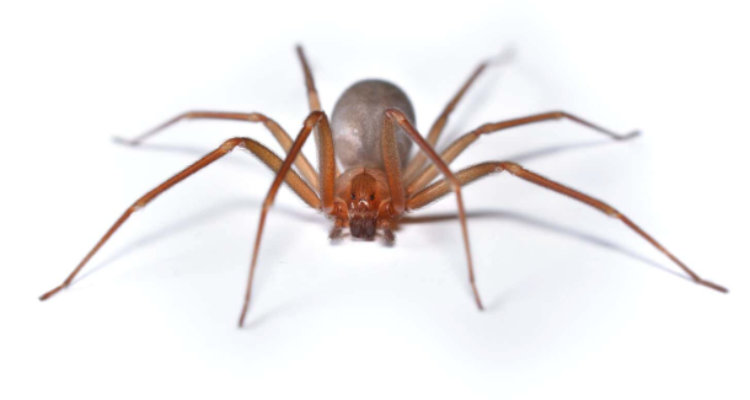
The Chilean Recluse Spider (Loxosceles laeta) is one of the most dangerous members of the recluse spider family (Loxosceles spp.). Known for its potent venom and reclusive nature, this spider has earned a fearsome reputation, particularly in its native South America. Let’s explore this spider in greater detail, covering its biology, behavior, venom, and impact on humans.
Physical Description
-
Size and Appearance: The Chilean Recluse Spider is relatively large for a recluse spider, with a body length of up to 3.8 cm (1.5 inches) and a leg span that can reach 7–8 cm (2.8–3.1 inches). Its body is light to medium brown, with a distinctive dark violin-shaped marking on the cephalothorax (the front part of the body), which gives it the nickname “violin spider” or “fiddleback spider.” Its legs are long and slender, and its abdomen is covered in fine hairs.
-
Eyes: Unlike most spiders, which have eight eyes, the Chilean Recluse has only six eyes, arranged in pairs (dyads) in a semicircular pattern. This unique eye arrangement is a key identifying feature of recluse spiders.
Habitat and Distribution
-
Range: The Chilean Recluse Spider is native to South America, particularly Chile, Argentina, Peru, and Uruguay. It has also been introduced to other regions, including parts of North America, Europe, and Australia, often through human activity such as the transport of goods.
-
Habitat: This spider prefers dry, sheltered environments and is commonly found in human dwellings, such as homes, sheds, and storage areas. It hides in dark, undisturbed places like closets, behind furniture, under beds, and in boxes or piles of clothing. Outdoors, it may inhabit woodpiles, rock crevices, and under bark.
Behavior and Hunting
-
Nocturnal and Reclusive: As its name suggests, the Chilean Recluse is a solitary and reclusive spider. It is primarily nocturnal, emerging at night to hunt for prey.
-
Diet: The spider feeds on small insects and other arthropods, which it immobilizes with its venom. It does not build webs to catch prey but instead relies on its speed and venom to subdue its victims.
-
Reproduction: Female Chilean Recluse Spiders produce multiple egg sacs, each containing up to 50 eggs. The spiderlings hatch after several weeks and undergo several molts before reaching adulthood.
Venom and Its Effects
-
Venom Composition: The venom of the Chilean Recluse contains a potent cytotoxin called sphingomyelinase D, which destroys cell membranes and causes tissue necrosis (cell death). It also contains enzymes that break down proteins and other cellular components.
-
Symptoms of Envenomation: A bite from the Chilean Recluse can cause loxoscelism, a condition characterized by localized tissue damage. Symptoms typically include:
-
Local Effects: Severe pain, redness, swelling, and the formation of a blister at the bite site. Over time, the tissue may die, leading to a deep, slow-healing ulcer that can leave permanent scarring.
-
Systemic Effects: In severe cases, the venom can cause systemic symptoms such as fever, chills, nausea, vomiting, and muscle pain. Rarely, it can lead to hemolysis (destruction of red blood cells), kidney failure, or even death, particularly in children or individuals with weakened immune systems.
-
-
Treatment: Immediate medical attention is crucial for suspected Chilean Recluse bites. Treatment may include wound care, pain management, and, in severe cases, antivenom. Early intervention can help minimize tissue damage and systemic effects.
Ecological Role
-
Predator and Prey: The Chilean Recluse plays a role in controlling insect populations, making it beneficial to ecosystems. However, its reclusive nature and preference for human habitats limit its ecological impact compared to other spiders.
-
Invasive Potential: The spider’s ability to thrive in human-altered environments has contributed to its spread as an invasive species in some regions. Its adaptability and reproductive success make it a formidable colonizer.
Human Interaction and Safety
-
Prevention: To reduce the risk of Chilean Recluse bites, people should take precautions such as:
-
Shaking out clothing, shoes, and bedding before use.
-
Wearing gloves when handling stored items or working in areas where the spider may reside.
-
Regularly cleaning and inspecting storage areas, closets, and other dark, undisturbed spaces.
-
-
First Aid: If bitten, it is important to remain calm and seek medical attention immediately. Applying a cold compress to the bite site can help reduce swelling and pain, but cutting or sucking the wound is not recommended.
Comparison to Other Recluse Spiders
-
Venom Potency: The Chilean Recluse is considered the most dangerous of the recluse spiders due to the potency of its venom and the severity of its bites. Other recluse species, such as the Brown Recluse (Loxosceles reclusa), also cause necrotic wounds but are generally less severe.
-
Geographic Range: While the Chilean Recluse is primarily found in South America, other recluse species have broader distributions, such as the Brown Recluse in the United States.
Conclusion
The Chilean Recluse Spider is a highly venomous and reclusive arachnid that poses a significant threat to humans, particularly in its native South America. Its potent cytotoxin can cause severe tissue damage and, in rare cases, life-threatening systemic effects. By understanding its behavior, habitat, and the risks it poses, humans can take steps to minimize encounters and respond effectively to bites. Ongoing research and public awareness are essential to mitigate the impact of this dangerous spider on human health and safety.
7. The Six-Eyed Sand Spider (Sicarius hahni)

The Six-Eyed Sand Spider (Sicarius hahni) is a fascinating and enigmatic arachnid that thrives in some of the harshest environments on Earth—the deserts of Africa and South America. Known for its exceptional camouflage and potent venom, this spider is a master of ambush predation. Let’s delve deeper into its biology, behavior, venom, and ecological role.
Physical Description
-
Size and Appearance: The Six-Eyed Sand Spider is a medium-sized spider, with a body length of up to 5 cm (2 inches) and a leg span that can reach 10–12 cm (4–5 inches). Its body is flattened and crab-like, adapted for life in sandy environments. The spider’s coloration ranges from pale yellow to reddish-brown, allowing it to blend seamlessly with the desert sand. Its most distinctive feature is its six eyes, arranged in three pairs, which is unusual for spiders (most have eight eyes).
-
Camouflage: The spider’s body is covered in fine hairs that trap sand particles, enhancing its ability to remain hidden from both prey and predators. This adaptation makes it nearly invisible when buried in the sand.
Habitat and Distribution
-
Range: The Six-Eyed Sand Spider is found in the deserts of southern Africa (e.g., Namibia, South Africa) and South America (e.g., Chile, Argentina). It thrives in arid, sandy environments where it can exploit its camouflage and ambush hunting strategies.
-
Habitat: This spider prefers sandy or loose soil where it can easily bury itself. It creates shallow burrows or simply lies in wait beneath a thin layer of sand, exposing only its eyes to detect passing prey.
Behavior and Hunting
-
Ambush Predator: The Six-Eyed Sand Spider is a patient and efficient ambush predator. It buries itself in the sand, leaving only its eyes exposed, and waits for unsuspecting prey to come within striking distance. When prey approaches, the spider lunges out with remarkable speed, delivering a venomous bite.
-
Diet: Its diet consists primarily of insects, scorpions, and other small arthropods. Occasionally, it may prey on small lizards or other vertebrates.
-
Reproduction: Little is known about the reproductive behavior of this spider, but like other arachnids, it likely lays eggs in a silk-lined burrow or hidden crevice. The spiderlings hatch and disperse, adopting the same cryptic lifestyle as adults.
Venom and Its Effects
-
Venom Composition: The venom of the Six-Eyed Sand Spider is poorly understood but is believed to contain potent cytotoxins and hemotoxins. These toxins can cause severe tissue necrosis (cell death) and may also affect blood vessels and organs.
-
Symptoms of Envenomation: While bites from this spider are rare due to its reclusive nature, they are potentially dangerous. Symptoms may include:
-
Local Effects: Severe pain, swelling, and tissue necrosis at the bite site. The venom can destroy skin, muscle, and even bone, leading to large, slow-healing wounds.
-
Systemic Effects: In severe cases, the venom may cause systemic symptoms such as fever, nausea, vomiting, and organ damage. There is no antivenom available for bites from this spider, making medical treatment supportive and focused on managing symptoms.
-
-
Human Encounters: Due to its cryptic nature and remote habitat, bites on humans are extremely rare. However, its venom is considered one of the most potent among spiders, and caution is advised when handling or encountering this species.
Ecological Role
-
Predator and Prey: The Six-Eyed Sand Spider plays a vital role in controlling insect and arthropod populations in desert ecosystems. It is also preyed upon by larger predators, such as birds, reptiles, and mammals, contributing to the food web.
-
Adaptability: Its ability to thrive in harsh, arid environments demonstrates its remarkable adaptability. Its camouflage and ambush hunting strategies are finely tuned to its desert habitat.
Human Interaction and Safety
-
Prevention: Due to its reclusive nature and remote habitat, the risk of human encounters with the Six-Eyed Sand Spider is low. However, individuals in desert regions should exercise caution when handling rocks, logs, or sand where the spider may be hiding.
-
First Aid: If bitten, immediate medical attention is essential. While there is no specific antivenom, wound care, pain management, and monitoring for systemic symptoms are critical. Applying a cold compress to the bite site may help reduce swelling and pain.
Scientific Interest
-
Venom Research: The venom of the Six-Eyed Sand Spider is of great interest to researchers due to its potent cytotoxic properties. Studies on its venom could lead to insights into cell biology and the development of new medical treatments, such as targeted therapies for cancer or other diseases.
-
Cryptic Behavior: The spider’s unique camouflage and ambush strategies make it a fascinating subject for studies on predator-prey interactions and evolutionary adaptations.
Conclusion
The Six-Eyed Sand Spider is a remarkable and mysterious creature that exemplifies the ingenuity of nature. Its ability to blend seamlessly into its environment and its potent venom make it a formidable predator in the desert ecosystem. While its reclusive nature minimizes the risk to humans, its venom serves as a reminder of the hidden dangers that can lurk in the natural world. By respecting its habitat and understanding its behavior, we can appreciate this enigmatic spider for its role in the delicate balance of desert life.
8. The Wolf Spider (Lycosidae spp.)

The Wolf Spider (family Lycosidae) is a diverse and widespread group of spiders known for their hunting prowess and unique behaviors. Unlike many other spiders, Wolf Spiders do not rely on webs to catch prey but instead actively hunt their targets, earning them their name due to their wolf-like stalking behavior. Let’s explore these fascinating spiders in greater detail, covering their biology, behavior, habitat, and interactions with humans.
Physical Description
-
Size and Appearance: Wolf Spiders vary greatly in size depending on the species, ranging from a few millimeters to several centimeters in body length. They are typically robust and hairy, with a body coloration that ranges from brown, gray, or black to more vibrant patterns of stripes or spots. This coloration helps them blend into their surroundings.
-
Eyes: One of the most distinctive features of Wolf Spiders is their eye arrangement. They have eight eyes arranged in three rows: four small eyes in the bottom row, two large forward-facing eyes in the middle row, and two medium-sized eyes on top. This arrangement gives them excellent vision, which is crucial for their hunting lifestyle.
-
Legs: Their legs are strong and adapted for running, allowing them to chase down prey with impressive speed.
Habitat and Distribution
-
Range: Wolf Spiders are found worldwide, inhabiting every continent except Antarctica. They are highly adaptable and thrive in a variety of environments.
-
Habitat: These spiders are ground-dwellers and can be found in a wide range of habitats, including grasslands, forests, deserts, wetlands, and even urban areas. They often live in burrows, under rocks, logs, or leaf litter, and some species are known to wander into homes.
Behavior and Hunting
-
Active Hunters: Unlike web-building spiders, Wolf Spiders are cursorial hunters, meaning they actively pursue and ambush their prey. They rely on their keen eyesight and speed to catch insects, other spiders, and small invertebrates.
-
Nocturnal Lifestyle: Most Wolf Spiders are nocturnal, hunting at night and hiding during the day. However, some species are active during the day.
-
Maternal Care: One of the most remarkable behaviors of Wolf Spiders is their maternal care. After laying her eggs, the female carries the egg sac attached to her spinnerets. Once the spiderlings hatch, they climb onto her back and remain there for several days or even weeks until they are ready to disperse. This level of parental care is rare among spiders.
Venom and Its Effects
-
Venom Composition: Wolf Spider venom is primarily designed to immobilize and digest their prey. It contains a mix of enzymes and toxins that break down tissues and paralyze small insects.
-
Human Envenomation: While Wolf Spiders are not considered highly dangerous to humans, their bites can be painful. Symptoms of a bite may include:
-
Local Effects: Pain, redness, swelling, and itching at the bite site. These symptoms are usually mild and resolve within a few hours to days.
-
Allergic Reactions: In rare cases, individuals may experience an allergic reaction, which could lead to more severe symptoms such as dizziness, nausea, or swelling beyond the bite area.
-
-
Treatment: Most Wolf Spider bites do not require medical attention. Cleaning the bite area with soap and water, applying a cold compress, and taking over-the-counter pain relievers are usually sufficient. However, if symptoms persist or worsen, medical advice should be sought.
Ecological Role
-
Predator and Prey: Wolf Spiders play a crucial role in controlling insect populations, making them beneficial to ecosystems and agriculture. They are also preyed upon by birds, reptiles, and larger spiders, contributing to the food web.
-
Adaptability: Their ability to thrive in diverse habitats and their active hunting strategy make them highly adaptable and successful predators.
Human Interaction and Safety
-
Prevention: To reduce the risk of Wolf Spider bites, people should:
-
Wear gloves when working in areas where spiders may reside, such as gardens, woodpiles, or storage areas.
-
Shake out clothing, shoes, and bedding before use, especially in regions where Wolf Spiders are common.
-
Seal cracks and gaps in homes to prevent spiders from entering.
-
-
First Aid: If bitten, clean the bite area with soap and water, apply a cold compress to reduce swelling, and monitor for any signs of an allergic reaction. Seek medical attention if symptoms are severe or persistent.
Interesting Facts
-
Speed and Agility: Wolf Spiders are among the fastest spiders, capable of running short distances at high speeds to catch prey or escape predators.
-
Lifespan: Most Wolf Spiders live for about one year, though some species may live longer.
-
Diversity: The family Lycosidae includes over 2,300 species, making it one of the most diverse spider families.
Conclusion
Wolf Spiders are fascinating and ecologically important predators that play a vital role in maintaining the balance of insect populations. While their bites can be painful, they are generally harmless to humans and rarely require medical attention. By understanding their behavior and habitat, we can appreciate these spiders for their contributions to the ecosystem and take simple precautions to minimize the risk of bites. Their adaptability, hunting skills, and unique maternal care make them one of the most intriguing groups of spiders in the world.

The Hobo Spider (Eratigena agrestis) is a species of funnel-web spider that has garnered attention due to its invasive spread and its often-misunderstood reputation. Originally native to Europe, it has established itself in parts of North America, where it is sometimes mistaken for the more dangerous Brown Recluse (Loxosceles reclusa). Let’s explore the Hobo Spider in greater detail, covering its biology, behavior, venom, and impact on humans.
Physical Description
-
Size and Appearance: The Hobo Spider is a medium-sized spider, with a body length of up to 2 cm (0.8 inches) and a leg span of about 4–5 cm (1.6–2 inches). Its coloration ranges from light to medium brown, with a distinctive chevron-shaped pattern on its abdomen. Unlike the Brown Recluse, it does not have a violin-shaped marking on its cephalothorax.
-
Eyes: Like most spiders, the Hobo Spider has eight eyes, arranged in two rows of four. This distinguishes it from the Brown Recluse, which has only six eyes.
-
Legs: Its legs are relatively long and covered in fine hairs, giving it a somewhat spindly appearance.
Habitat and Distribution
-
Range: Originally native to Europe, the Hobo Spider has been introduced to North America, particularly in the Pacific Northwest (e.g., Washington, Oregon, Idaho, and Utah). It thrives in temperate climates and has adapted well to urban environments.
-
Habitat: The Hobo Spider prefers sheltered, dry environments and is commonly found under rocks, logs, and in woodpiles. It also inhabits human-made structures such as basements, garages, and crawl spaces. It builds funnel-shaped webs, which it uses to capture prey and as a retreat.
Behavior and Hunting
-
Web Building: The Hobo Spider constructs a funnel-shaped web made of non-sticky silk. The web is typically flat and horizontal, with a funnel-like retreat at one end where the spider hides. When prey touches the web, the spider rushes out to capture it.
-
Diet: The Hobo Spider feeds on insects and other small arthropods, which it immobilizes with its venom. It is an opportunistic hunter and relies on its web to detect and capture prey.
-
Reproduction: Female Hobo Spiders produce multiple egg sacs, each containing up to 100 eggs. The spiderlings hatch after several weeks and disperse, building their own webs and hunting independently.
Venom and Its Effects
-
Venom Composition: The venom of the Hobo Spider contains a mix of enzymes and toxins designed to immobilize and digest its prey. While it is not as potent as the venom of the Brown Recluse, it can still cause localized symptoms in humans.
-
Symptoms of Envenomation: A bite from a Hobo Spider can cause:
-
Local Effects: Pain, redness, swelling, and itching at the bite site. In some cases, a blister may form, which can break open and lead to a slow-healing ulcer.
-
Systemic Effects: Systemic symptoms are rare but may include headache, nausea, and fatigue. There is no conclusive evidence that Hobo Spider bites cause the severe tissue necrosis (cell death) associated with Brown Recluse bites.
-
-
Treatment: Most Hobo Spider bites can be managed with basic first aid, such as cleaning the bite area with soap and water, applying a cold compress, and taking over-the-counter pain relievers. If symptoms persist or worsen, medical attention should be sought.
Ecological Role
-
Predator and Prey: The Hobo Spider plays a role in controlling insect populations, making it beneficial to ecosystems and agriculture. It is also preyed upon by birds, reptiles, and larger spiders, contributing to the food web.
-
Invasive Potential: The Hobo Spider’s ability to thrive in human-altered environments has contributed to its spread as an invasive species in North America. Its adaptability and reproductive success make it a formidable colonizer.
Human Interaction and Safety
-
Prevention: To reduce the risk of Hobo Spider bites, people should:
-
Wear gloves when working in areas where spiders may reside, such as woodpiles, gardens, or storage areas.
-
Seal cracks and gaps in homes to prevent spiders from entering.
-
Regularly clean and inspect storage areas, basements, and crawl spaces.
-
-
First Aid: If bitten, clean the bite area with soap and water, apply a cold compress to reduce swelling, and monitor for any signs of infection or allergic reaction. Seek medical attention if symptoms are severe or persistent.
Misidentification with the Brown Recluse
-
Distinguishing Features: The Hobo Spider is often mistaken for the Brown Recluse due to its similar size and coloration. However, key differences include:
-
Eye Arrangement: The Hobo Spider has eight eyes, while the Brown Recluse has six.
-
Markings: The Hobo Spider lacks the violin-shaped marking on its cephalothorax that is characteristic of the Brown Recluse.
-
Web Structure: The Hobo Spider builds funnel-shaped webs, while the Brown Recluse does not build webs for hunting.
-
Conclusion
The Hobo Spider is a fascinating yet misunderstood arachnid that has successfully colonized parts of North America. While its bite can cause localized pain and discomfort, it is not as dangerous as the Brown Recluse, and severe reactions are rare. By understanding its behavior, habitat, and the risks it poses, humans can take steps to minimize encounters and respond effectively to bites. Ongoing research and public awareness are essential to clarify the true impact of this spider and to mitigate its spread as an invasive species.
10. The False Black Widow Spider (Steatoda grossa)

The False Black Widow Spider (Steatoda grossa), also known as the Cupboard Spider, is a species often confused with the more notorious Black Widow (Latrodectus spp.). While it shares some similarities in appearance, the False Black Widow is less venomous and generally poses a lower risk to humans. Let’s explore this spider in greater detail, covering its biology, behavior, venom, and impact on humans.
Physical Description
-
Size and Appearance: The False Black Widow is a small to medium-sized spider, with a body length of up to 8 mm (0.3 inches) and a leg span of about 1–2 cm (0.4–0.8 inches). Its body is dark brown or black, with a bulbous abdomen that is often shiny and smooth. Unlike the true Black Widow, it lacks the distinctive red hourglass marking on the underside of the abdomen. Instead, it may have faint, cream-colored markings or no markings at all.
-
Sexual Dimorphism: Females are larger and more robust than males, with a more pronounced abdomen. Males are smaller and less conspicuous.
Habitat and Distribution
-
Range: The False Black Widow is found worldwide in temperate regions, including Europe, North America, Australia, and parts of Asia. It has adapted well to human-altered environments and is often found in close proximity to human habitation.
-
Habitat: This spider prefers sheltered, dry environments and is commonly found in homes, sheds, garages, and other structures. It builds irregular, tangled webs in dark, secluded areas such as under furniture, in cupboards, or in corners of rooms. Outdoors, it may inhabit rock crevices, under bark, or in woodpiles.
Behavior and Hunting
-
Web Building: The False Black Widow constructs a messy, three-dimensional web made of strong, sticky silk. The web is used to capture prey and as a retreat for the spider.
-
Diet: The False Black Widow is a carnivorous predator that feeds primarily on insects such as flies, mosquitoes, and beetles. It uses its venom to immobilize prey before consuming it.
-
Reproduction: Female False Black Widows produce multiple egg sacs, each containing up to 200 eggs. The spiderlings hatch after several weeks and disperse, building their own webs and hunting independently.
Venom and Its Effects
-
Venom Composition: The venom of the False Black Widow contains a mix of enzymes and toxins designed to immobilize and digest its prey. While it is less potent than the venom of the true Black Widow, it can still cause localized symptoms in humans.
-
Symptoms of Envenomation: A bite from a False Black Widow can cause:
-
Local Effects: Pain, redness, swelling, and itching at the bite site. In some cases, a blister may form, which can break open and lead to a slow-healing ulcer.
-
Systemic Effects: Systemic symptoms are rare but may include muscle cramps, nausea, and headache. Severe reactions are uncommon and typically occur in individuals with allergies or compromised health.
-
-
Treatment: Most False Black Widow bites can be managed with basic first aid, such as cleaning the bite area with soap and water, applying a cold compress, and taking over-the-counter pain relievers. If symptoms persist or worsen, medical attention should be sought.
Ecological Role
-
Predator and Prey: The False Black Widow plays a role in controlling insect populations, making it beneficial to ecosystems and agriculture. It is also preyed upon by birds, reptiles, and larger spiders, contributing to the food web.
-
Adaptability: Its ability to thrive in both natural and human-altered environments demonstrates its adaptability. However, this also increases the likelihood of human encounters.
Human Interaction and Safety
-
Prevention: To reduce the risk of False Black Widow bites, people should:
-
Wear gloves when working in areas where spiders may reside, such as woodpiles, gardens, or storage areas.
-
Seal cracks and gaps in homes to prevent spiders from entering.
-
Regularly clean and inspect storage areas, basements, and crawl spaces.
-
-
First Aid: If bitten, clean the bite area with soap and water, apply a cold compress to reduce swelling, and monitor for any signs of infection or allergic reaction. Seek medical attention if symptoms are severe or persistent.
Comparison to the True Black Widow
-
Venom Potency: The False Black Widow’s venom is less potent than that of the true Black Widow, making its bites less dangerous. However, it can still cause significant discomfort and localized symptoms.
-
Coloration and Markings: The False Black Widow lacks the distinctive red hourglass marking on the underside of the abdomen, which is a key identifying feature of the true Black Widow. Its coloration is generally darker and less vibrant.
-
Behavior: The False Black Widow is generally less aggressive than the true Black Widow and is more likely to retreat when disturbed. However, it is still capable of biting if threatened.
Conclusion
The False Black Widow Spider is a fascinating yet misunderstood arachnid that has successfully colonized many parts of the world. While its bite can cause localized pain and discomfort, it is not as dangerous as the true Black Widow, and severe reactions are rare. By understanding its behavior, habitat, and the risks it poses, humans can take steps to minimize encounters and respond effectively to bites. Ongoing research and public awareness are essential to clarify the true impact of this spider and to mitigate its spread as an invasive species.
This list is not intended to cause undue alarm. The vast majority of spider encounters are harmless. However, it is crucial to be aware of the potential dangers posed by some species and to take appropriate precautions when in areas where these spiders are known to reside.
Remember:
-
- Observe spiders from a safe distance and avoid handling them unnecessarily.
-
- If bitten by a suspected venomous spider, seek medical attention immediately.
By understanding the potential dangers and taking appropriate precautions, we can coexist peacefully with these fascinating creatures and appreciate their vital role in our ecosystems.
Disclaimer:
This blog post is for informational purposes only and should not be considered medical advice. Always consult with a qualified healthcare professional for any medical concerns.